
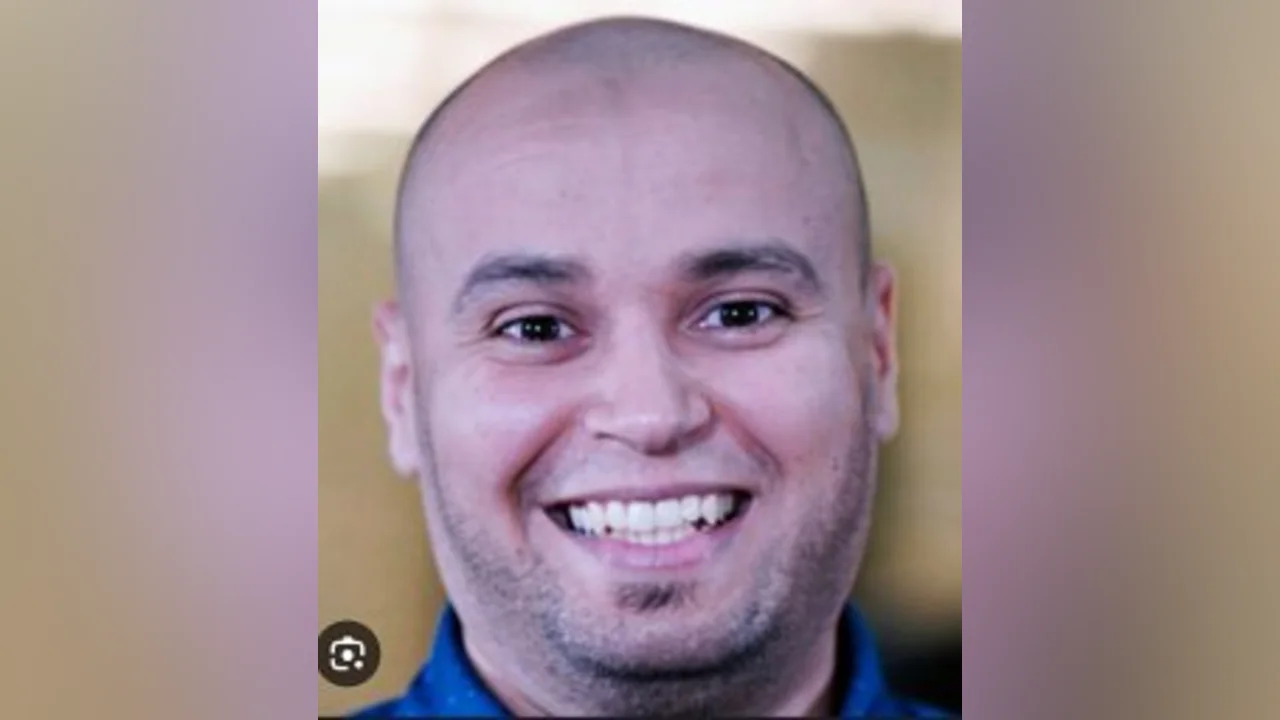
Slimane Laref
- Research Scientist
Dr. Slimane Laref is a Research Scientist specializing in Chemical Physics and Physical Chemistry with expertise in theoretical materials modeling. His research focuses on predicting material properties (structural, electronic, optical) using Density Functional Theory (DFT), Deep Learning, Machine Learning (AI), and Tight-Binding methods. Dr. Laref applies his work to critical areas like improving CO2 capture using MOFs, and also in designing 2D materials for next-generation sustainable nanotechnology.
Biography
Dr. Slimane Laref is a distinguished research scientist specializing in chemical physics and physical chemistry. He’s widely recognized for his expertise in theoretical modeling and the prediction of new material properties. He earned his PhD in 2010 from ENS Lyon at the University of Lyon, France, where he developed a strong background in advanced materials science through computational methods.
Research and Expertise
Dr. Laref’s research focuses on understanding and predicting the fundamental behavior of materials, especially their structural, orbital, electronic, and optical properties. He works across several key theoretical and computational frameworks: Density Functional Theory (DFT): a quantum mechanical approach he uses to analyze the electronic properties and behavior of complex systems with precision. Machine Learning (ML) and Artificial Intelligence (AI): central to his current research, these methods help accelerate the discovery of new drugs and materials while improving the accuracy of computational predictions. Computational Approaches: toolkit includes molecular dynamics simulations, Monte Carlo techniques, empirical models, and the tight-binding method. These tools are highly effective for calculating bunch of properties such as binding energy, enthalpy, molecular states, electronic structures and studying materials at the atomic level.
Applications and Impact
Dr. Laref’s work focuses on materials that are essential for clean energy and environmental innovation. His research contributes to several high-impact areas: Environmental Technology: His studies on metal–organic frameworks (MOFs) aim to improve CO₂ capture efficiency, a crucial step in addressing global climate change. Next-Generation Devices: He explores advanced materials such as 2D van der Waals structures, semiconductors, and transition metal compounds. These materials form the foundation for cutting-edge technologies, including high-performance solar cells, sensors, and data storage systems. Through his theoretical insights, Dr. Laref provides the scientific foundation for designing and optimizing materials with enhanced performance. His work continues to drive progress toward sustainable, energy-efficient technologies that support a cleaner and more resilient future.
Expertise and Interests
Chemical Physics and Physical Chemistry, focusing on the theoretical modeling and prediction of material properties.By leveraging advanced computational frameworks like Density Functional Theory (DFT) and Machine Learning (AI) to study the structural, electronic, and optical characteristics of materials. His impactful research is directed toward clean energy and environmental solutions, including the design of Metal-Organic Frameworks (MOFs) for efficient CO2 capture and the optimization of 2D materials and semiconductors essential for next-generation solar cells and sustainable technology.
About
I’m a Research Scientist who’s passionate about understanding how materials behave at the atomic and electronic level and finding new and fast ways to design them for real-world impact. With a background in Chemical Physics and Physical Chemistry, I bring together theory, computation, and artificial intelligence to speed up the discovery of advanced materials. I am using methods like Density Functional Theory (DFT), Deep Learning and Machine Learning to predict material properties and guide the development of next-generation technologies. My recent research mainly focuses on clean energy and environmental solutions, including the design of Metal–Organic Frameworks (MOFs) for efficient CO₂ capture and the optimization of 2D materials and semiconductors for sustainable solar energy. I’m also involve to cutting-edge areas such as topological insulators, spintronics, nanomaterials, sensors, electrochemistry, and catalysis. In every project, my goal is to understand and control the behavior of low-dimensional systems and nanostructures to help drive the next generation of materials innovation.
Education
- Doctor of Philosophy (Ph.D.)
- Chemistry, Ecole Normale Superieur de Lyon , France, 2010